How HR And Team Leads Can Use Employee Feedback And Surveys To Improve Team Performance
Fluorine

Feedback at work often arrives too late, too infrequently, or is tucked away in reports that never result in change. For startups and growing teams, turning employee insights into action is the key to unlocking real performance gains. When feedback is structured and connected directly to day-to-day work, it becomes a driver of engagement, satisfaction, and productivity.
Teams using an all in one task management and communication platform like Fluorine can make this feedback loop an integrated part of their workflow.
Why Most Feedback Programs Fail
It’s a question nearly every HR professional and team lead faces: why do so many feedback programs fall short, despite the best intentions?
The real answer lies in three core breakdowns: lack of cadence, lack of trust, and disconnect from daily work. Studies show that 98% of employees disengage when they receive little to no feedback, and 65% of workers wish they received more feedback than they do now (tmhra.org). When feedback is infrequent or seems to disappear into a black hole, employees lose motivation and the company suffers higher turnover rates—companies investing in regular employee feedback have 14.9% lower turnover rates.
Teams that do get regular, actionable feedback see 21% greater profitability, and 85% of employees in these environments take more initiative at work (tmhra.org). Four out of ten employees who receive little or no feedback are actively disengaged from their work.
When feedback is infrequent, impersonal, or not acted upon, it quickly becomes meaningless.
Building a culture of trust is equally essential. If employees don’t believe their feedback will lead to change or feel safe sharing honest opinions, participation drops. Psychological safety, as defined by Dr. Amy Edmondson, is critical: “Psychological safety is a belief that one will not be punished or humiliated for speaking up with ideas, questions, concerns, or mistakes.” Additionally, employees who do not feel heard are 4.6 times less likely to produce their best work.
When results from surveys are siloed in reports, not integrated into the team’s workflow, momentum is lost.
High-performing teams tie insights directly to their daily routines and follow up with visible improvements—otherwise, feedback programs risk becoming just another HR checkbox.
Teams looking to create a centralized workspace for tasks and communication can explore Fluorine to break this cycle.
Keywords: employee feedback, employee engagement, survey best practices
No Cadence
Employees crave frequent, meaningful check-ins, not just annual reviews. Regular feedback is directly correlated with higher engagement and lower turnover.
No Trust
Without anonymity or psychological safety, employees hesitate to share honestly. Building trust and assuring confidentiality are crucial for participation.
Results Live in a Report, Not in the Team’s Workflow
Feedback must be visible, actionable, and connected to daily work. When insights aren’t integrated into regular team routines, the impact is lost.
The 4 Survey Types That Actually Help Teams
Visual structure makes it easy to see how different survey types serve distinct purposes for team health and performance.
Pulse Surveys (Monthly)
What It CapturesWhen To UsePulse SurveyReal-time sentiment, moraleMonthly or biweekly
Real-World Example: Delta Air Lines introduced biweekly pulse surveys post-pandemic, achieving over 80% participation and a 12% boost in employee satisfaction (surveyconnect.com).
Project Retrospectives (End of Initiatives)
What It CapturesWhen To UseRetrospectiveLessons learned, process feedbackAfter major project
Onboarding Surveys (New Hires)
What It CapturesWhen To UseOnboardingNew hire experiences, integrationAfter onboarding
Employees who receive onboarding feedback are more likely to feel satisfied and stay beyond six months.
Engagement Checks (Quarterly Lightweight)
What It CapturesWhen To UseEngagementOverall satisfaction, commitmentQuarterly
Organizations conducting regular engagement checks see 14% higher engagement rates. RBC used pulse survey sentiment analysis to refine well-being programs, resulting in a 9% reduction in millennial turnover (surveyconnect.com).
If you want to run feedback inside the same workspace where work happens, review Fluorine’s feedback and survey tools.
Keywords: pulse surveys, employee surveys, feedback tools, onboarding surveys, employee engagement
Turning Feedback Into Action (The Missing Step)
Here’s how to make employee feedback drive true improvement:
Summarize Top Themes: Use analytics to identify the most important trends and concerns from survey responses.
Convert Themes Into Tasks With Owners: Assign responsibility to specific team members or leads, integrating these actions into your project or task management tool.
Communicate What Will Change (and What Won’t): Be transparent about which suggestions are being acted on and why, and keep employees updated on progress.
IBM’s AI-powered feedback system led to a 20% increase in retention rates among teams who regularly participated in surveys, showing the power of acting on employee insights (blogs.psico-smart.com). Adobe’s move to continuous feedback and 360-degree evaluations reduced turnover by 30% in two years (blogs.smart-360-feedback.com).
Organizations that use surveys to inform action have 23% lower turnover rates.
Teams that act on feedback, rather than just collecting it, see real gains in engagement, retention, and satisfaction.
To discover how teams can automate and track these steps, explore advanced features.
Keywords: action planning, feedback loops, team performance improvement, employee satisfaction metrics
Summarize Top Themes
Use data analytics to quickly identify recurring issues and opportunities for improvement.
Convert Themes Into Tasks With Owners
Assign follow-up actions directly in your team’s workflow, ensuring accountability and progress.
Communicate What Will Change (and What Won’t)
Let employees know how their feedback is shaping outcomes, closing the loop and building trust.
Where Fluorine Fits: Built-In Employee Feedback & Survey Tool
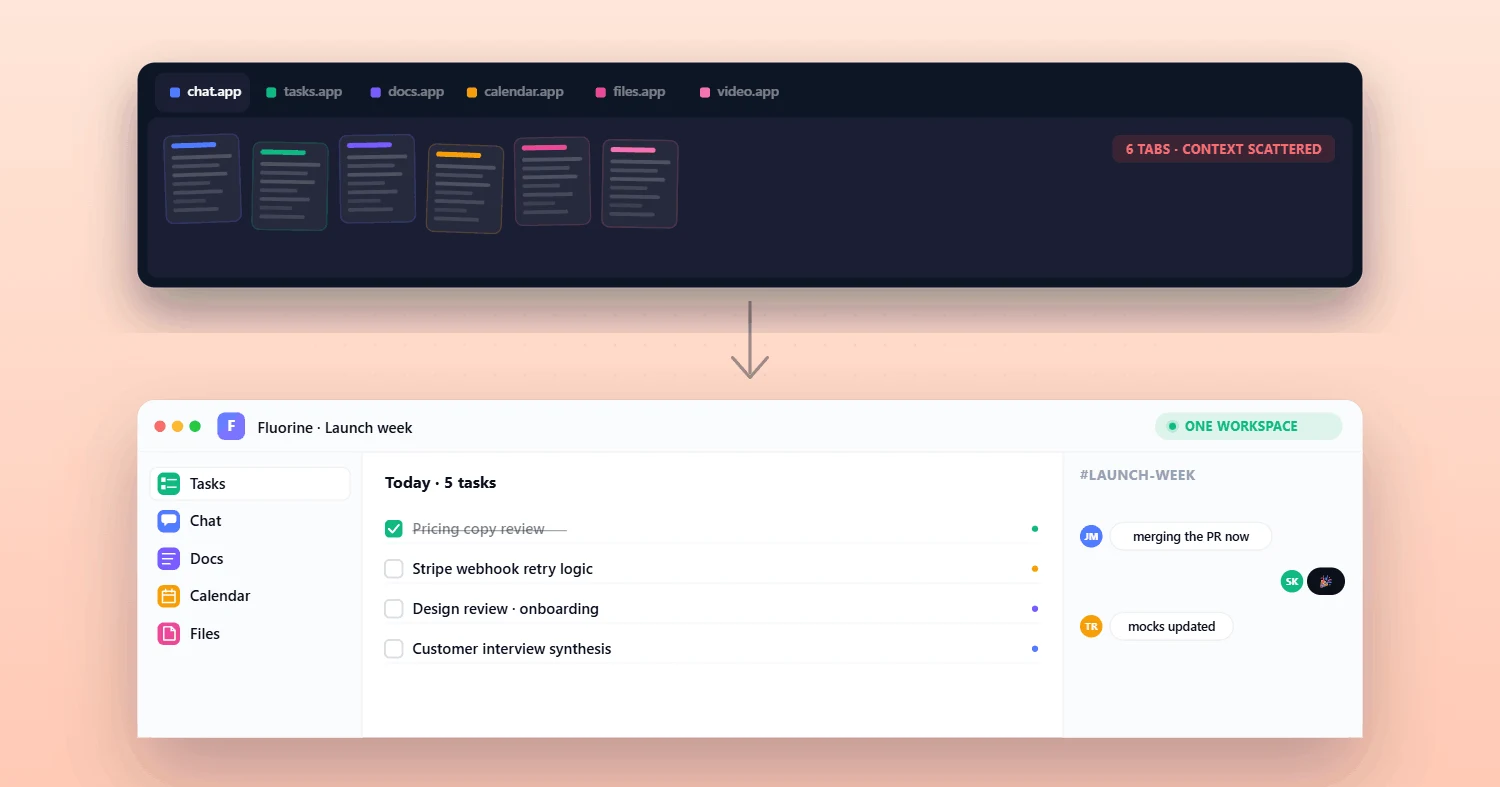
What makes Fluorine different? It brings feedback tools and task management together in a single platform, so insights aren’t lost in spreadsheets or disjointed apps.
Here’s how Fluorine stands out:
Integrated Feedback & Surveys: Collect employee perspectives and act on them within the same workspace you manage tasks and projects.
Real-Time Action: Assign feedback-driven tasks to owners and track progress without leaving the platform.
Proven Results: Over 1,200+ teams collaborate on Fluorine with a 94% customer satisfaction rate and a 28% increase in team productivity.
Teams report saving hours by consolidating tools in one platform.
Fluorine’s all-in-one approach solves the disconnect between feedback collection and real change.
When everything happens in one place, performance improvement becomes a habit, not an afterthought.
Learn more about Fluorine as an all in one task management and communication platform here.
Keywords: feedback tools, employee feedback, team performance improvement, feedback and survey tools
Key Takeaways & Next Steps
Too many teams collect feedback but never act on it, missing out on the gains that structured, actionable insights can deliver.
Consistent feedback, analyzed and turned into real tasks, transforms engagement and productivity.
Acting on structured employee feedback is the key to boosting team performance and retention.
Companies that make feedback a true part of their workflow see higher engagement and lower turnover—an advantage that grows with every cycle.
Integrating feedback into daily tasks with Fluorine supports long-term innovation and growth.
Ready to take your team’s performance tracking to the next level? Explore advanced features.
Keywords: team performance improvement, HR best practices, employee engagement
References
Transforming Performance Evaluations: AI-Powered Strategies for HR Success. (2024). tmhra.org. https://tmhra.org/wp-content/uploads/2024/05/Transforming-Performance-Evaluations-AI-Powered-Strategies-for-HR-Success.pdf
Pulse Checks Provide Ongoing Insights Into Employee Well-Being. (2024). surveyconnect.com. https://surveyconnect.com/news/pulse-checks-provide-ongoing-insights-into-employee-well-being/
What Are the Trends in Employee Satisfaction Survey Tools for 2024 and Beyond. (2024). blogs.psico-smart.com. https://blogs.psico-smart.com/blog-what-are-the-trends-in-employee-satisfaction-survey-tools-for-2024-and-beyond-157928
What Are the Long-Term Impacts of 360-Degree Evaluation Systems on Employees. (2024). blogs.smart-360-feedback.com. https://blogs.smart-360-feedback.com/blog-what-are-the-longterm-impacts-of-360degree-evaluation-systems-on-emplo-198353
Related topics
You may also like
Discover more articles that expand on similar ideas and themes
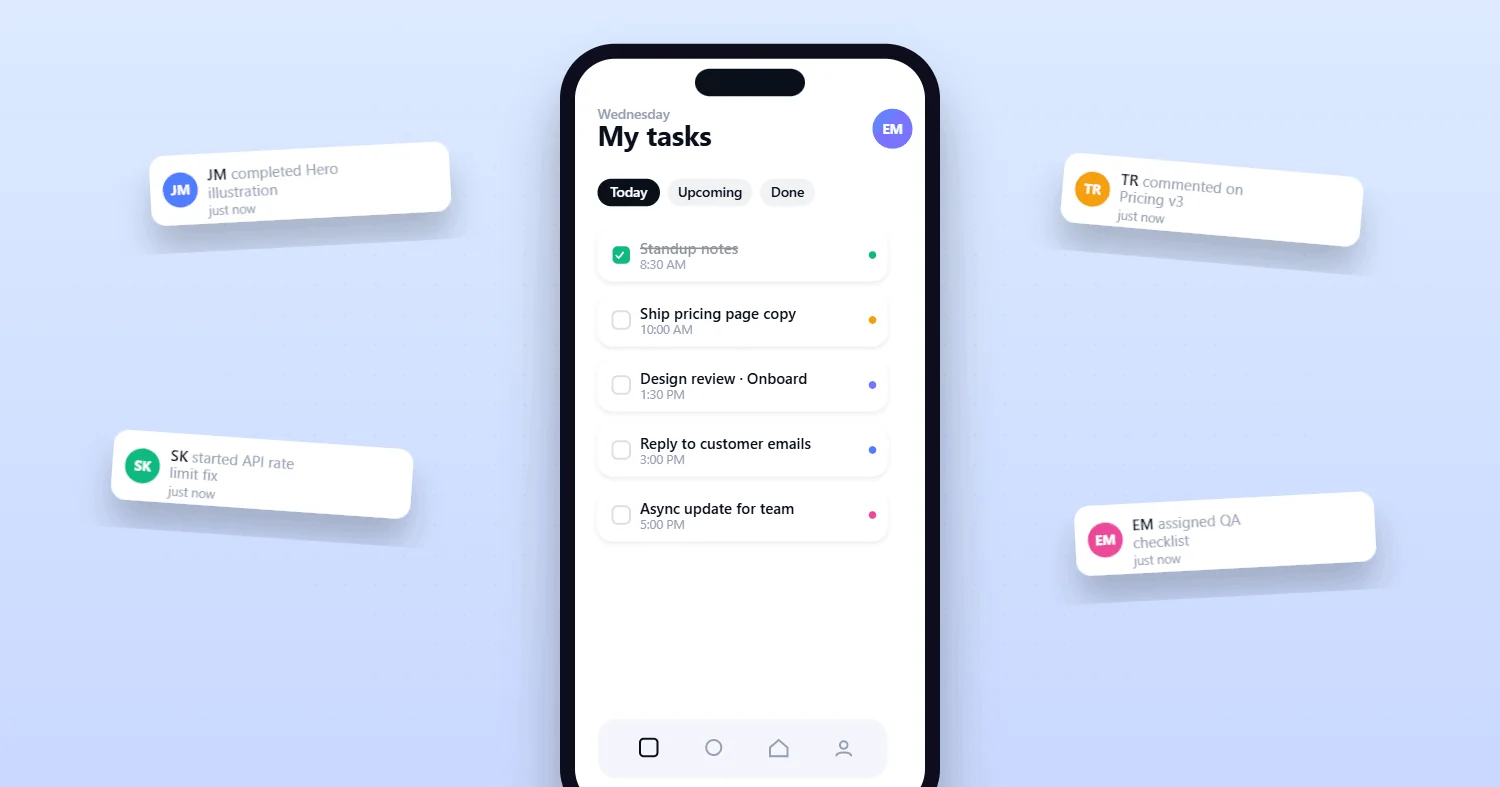
Stop switching tabs. Start actually shipping.
Fluorine replaces the stack your team already pays for. Add AI that does the work no one has time for. Start your free trial today.