Notification Hygiene: How to Use Real Time Updates Without Constant Interruptions
Fluorine
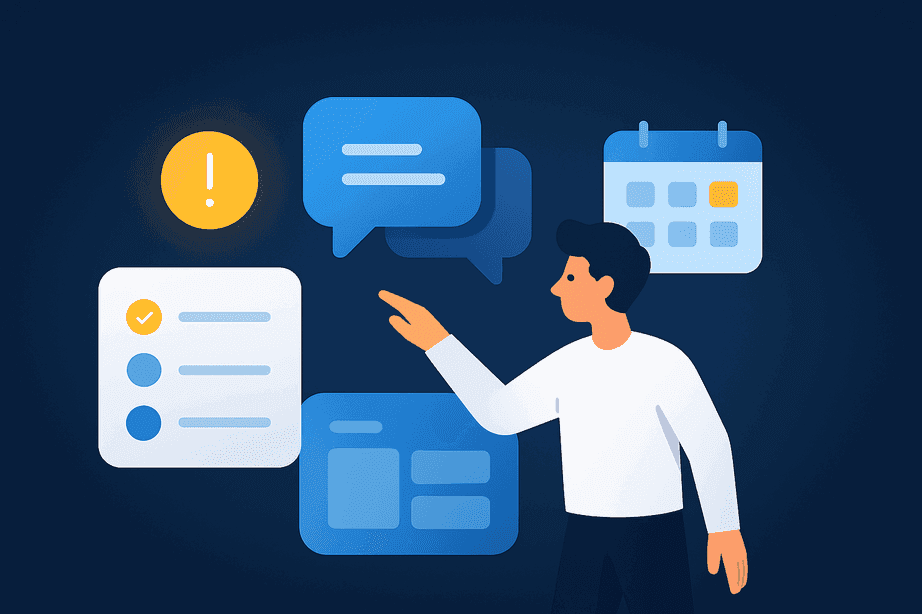
Ask any startup team or growing organization what sabotages their focus most, and you’ll likely hear the same answer: constant digital distractions. With an average of 25 interruptions a day, knowledge workers spend far too much time recovering lost focus rather than moving projects forward (tigrisgroupllc.com). In fact, 77% of employees find notifications from workplace digital tools distracting (peoplemanagement.co.uk).
By practicing good notification hygiene, teams can reclaim their attention and transform real-time updates from a source of stress into a driver of productivity. For those looking to create a focused, high-performing environment, resources like Fluorine’s documentation offer best practices for notification management in modern workspaces.
Key takeaways:
Notification overload fractures attention and makes deep work harder to sustain.
Not every update deserves an instant alert—prioritize what’s actionable and time-sensitive.
Move important context into task comments and threads so it’s easier to find later.
Team norms like mention rules, review windows, and focus blocks reduce unnecessary pings.
Managers can stay informed with scheduled reviews instead of constant check-ins.
Why Notification Overload Happens
The explosion of digital tools means we’re bombarded with pings, popups, and alerts around the clock. This “always-on” culture fragments attention and erodes deep work. According to research from the University of California, Irvine, it takes an average of 23 minutes and 15 seconds to return to a task after an interruption (rhenari.com).
Every interruption—no matter how small—adds up to hours of lost productivity each week.
Frequent notifications increase stress and cognitive workload, making it harder for teams to achieve meaningful progress (mdpi.com). For many, the anticipation of notifications creates a compulsive urge to check devices, compounding cognitive fatigue.
For guidance on taming digital interruptions, see Fluorine’s documentation on notification management.
What Deserves Alerts vs. What Can Wait
It’s a question every busy team faces: how do you get the updates you need, but avoid being pinged for every minor change?
The real solution is prioritization. Research shows that interruptions have a bigger impact on performance when tasks require high working memory demands (cognitiveresearchjournal.springeropen.com). Managing the timing and relevance of notifications—known as alert tiering—helps ensure only actionable or urgent updates break through, while the rest can be reviewed during scheduled check-ins (pubmed.ncbi.nlm.nih.gov).
If an update isn’t actionable today, it probably doesn’t need an immediate alert.
Anticipating notifications also triggers stress and the urge to check devices even when nothing’s changed. By customizing notification settings and using features like Focus Mode or “Do Not Disturb,” teams can regain control. Many organizations are also beginning to explore AI-powered notification tools that adapt delivery based on work context and personal routines.
For a practical guide, see Fluorine’s notification settings guide.
Use Task Comments and Threads to Reduce Noise
Ever feel like your team chat is a blur of quick questions and status updates?
High-performing teams are moving critical updates out of chat and into task comments and threads—making information easier to find and reducing the pressure to respond instantly. Structured, asynchronous communication, such as documenting decisions on tasks rather than in group chat, helps reduce interruptions and strengthens accountability (pubmed.ncbi.nlm.nih.gov).
This method is especially valuable for distributed and hybrid teams, where keeping communication organized is critical for alignment.
For more on this approach, see Async vs Synchronous Communication: When To Chat, Comment, Or Call for a deeper dive into the benefits of asynchronous workflows.
Team Notification Norms That Actually Work
Clear norms and routines are the backbone of strong notification hygiene. Here’s a practical way to set your team up for success:
Set “Mentions” Rules: Only tag team members when action is needed, not for FYIs.
Keep Updates on Tasks: All decisions or changes should live in the relevant task thread, not scattered across chat.
Schedule Daily Review Windows: Dedicate blocks of time for catching up on non-urgent updates, so focus time remains protected.
Use Do-Not-Disturb Blocks: Encourage everyone to use focus features to create uninterrupted work periods.
Studies in Applied Sciences confirm that managing the timing and relevance of notifications (through clear policies and routines) can significantly reduce their disruptive effects (mdpi.com).
Schedule regular reviews of your team’s notification settings to keep digital noise in check as work patterns evolve.
For more guidance, check out Team Communication Best Practices For Distributed And Hybrid Teams.
A Practical Notification Management Checklist for Busy Teams
If you’re trying to reduce workplace distractions but still need fast coordination, it helps to treat notification management like an operating habit—not a one-time settings change. Start by separating “work that needs a response” from “work that needs context.” That usually means pushing updates into task threads, limiting high-priority alerts to deadlines, blockers, and direct mentions, and using scheduled review windows for everything else.
Teams that want fewer pings often do best when tasks and communication live in the same place, so people don’t have to chase down context across chat, email, and project boards. If you’re exploring an all-in-one workspace approach, you can learn more about how Fluorine is set up on the Fluorine homepage.
A Manager Routine: Visibility Without Pinging People
Imagine a manager who no longer interrupts their team with constant check-ins.
Instead, they review blocked tasks and due dates during scheduled windows, commenting only when direction or clarification is really needed. Research shows that unplanned interruptions increase stress and reduce efficiency, while structured review windows foster calm accountability (mdpi.com).
Teams with well-defined check-in routines often experience greater autonomy and a sense of fairness in workload management.
This approach helps managers stay informed and keeps teams focused. Learn more in Weekly Planning for Startup Teams: A 30 Minute Workflow in One Workspace.
Closing: Calmer Updates, Better Execution
Notification hygiene isn’t about shutting out important information—it’s about creating space for real focus and better work. Studies consistently show that reducing interruptions lowers stress and improves team outcomes (mdpi.com).
Small changes, like setting clear norms and using the right tools, lead to lasting gains in productivity and job satisfaction.
As more organizations and policy leaders recognize the importance of digital well-being, improving notification hygiene is both a productivity tactic and a commitment to team mental health.
To get started, try Fluorine for your team and see how streamlined notifications can power better collaboration. For setup tips, visit Fluorine’s Docs.
Frequently Asked Questions
What does “notification hygiene” mean at work?
Notification hygiene is the practice of managing when and how updates reach you so you can stay informed without being interrupted all day. In this article, it includes setting team norms (like mention rules), using focus features, and keeping non-urgent updates for scheduled review windows.
How do we decide which notifications should be urgent?
A good rule is to reserve urgent alerts for updates that are time-sensitive and require action (for example, a blocker or a decision needed today). The article describes alert tiering as a way to prioritize what breaks through immediately versus what can wait for a check-in.
Will fewer notifications cause important updates to get missed?
Not if the team has a clear place where decisions and progress live. This article recommends moving key updates out of fast-moving chat and into task comments and threads, so information is easier to find and doesn’t depend on someone seeing a ping in real time.
What team norms help reduce notification overload quickly?
Start with a few consistent habits: limit @mentions to action-needed, keep updates on the relevant task, and create daily or weekly review windows for non-urgent items. Pair that with focus blocks (like Do Not Disturb) so deep work isn’t constantly broken up.
What can managers do instead of frequent check-ins?
Use scheduled windows to review blocked tasks and due dates, then comment only when direction or clarification is needed. That approach supports visibility while avoiding the stress and inefficiency that come from unplanned interruptions.
References
Tigris Group LLC. (n.d.). The High Cost of Interruptions. https://www.tigrisgroupllc.com/attention/the-high-cost-of-interruptions
People Management. (2025). Over three quarters of employees distracted by notifications in the workplace, research finds. https://www.peoplemanagement.co.uk/article/1878015/three-quarters-employees-distracted-notifications-workplace-research-finds
Rhenari. (n.d.). The hidden cost of context switching for remote teams. https://www.rhenari.com/blog/hidden-cost-context-switching-remote-teams
MDPI. (2018). The Impact of Interruptions on Cognitive Workload. https://www.mdpi.com/2076-3417/8/10/1780
Cognitive Research: Principles and Implications. (2021). The cost of interruptions in working memory. https://cognitiveresearchjournal.springeropen.com/articles/10.1186/s41235-021-00322-0
Related topics
You may also like
Discover more articles that expand on similar ideas and themes
Stop switching tabs. Start actually shipping.
Fluorine replaces the stack your team already pays for. Add AI that does the work no one has time for. Start your free trial today.